
This is an ongoing series of blog posts based on papers originally written for my church’s elder class. This week’s prompt: Please explain your understanding of repentance and faith.
Two posts ago I wrote on the baptism of the Holy Spirit, and in the previous one I moved onto regeneration, the effect of that baptism. Now the fruit of regeneration comes into view: faith and repentance. While they are two separate concepts with different definitions, they are hand in hand in the work these words describe in the lives of Christians. No one will have saving faith in Christ that is not accompanied by a lifetime of repentance from sin. Likewise, no one can walk away from their sin in any method that does not involve a faith in Christ born of the work of the Holy Spirit in their lives.
Faith Misunderstood
In his theological text Foundations of the Christian Faith, James Montgomery Boice uses the definition of faith provided in Hebrews 11:1, that it is “the assurance of things hoped for, the conviction of things unseen.” This is an idea that has been taken many directions by humans, and unfortunately many of them are to the detriment of the biblical God-centered understanding of faith.
Scripture shows us faith as a reaction of hopeful obedience to the testimony of God, of the work of Christ, imbued by the Holy Spirit. By that faith, we see ourselves as those awaiting an inheritance: true, eternal, sinless life, and a restored intimacy with God. By that faith we are empowered to trust God in obedience for the things He calls us to do, no matter what they may be.
It is in this vein that human misunderstanding or even false teaching may begin to bear bitter fruit. For example, in Matthew 17 Jesus’ admonition of the disciples that they were unable to drive out the demon because of their little faith, and that “if you have faith the size of a mustard seed, you will tell this mountain, ‘Move from here to there,’ and it will move. Nothing will be impossible for you.” Boice brings up the example of Norman Vincent Peale and his ideas of positive thinking, and we have Peale’s intellectual descendants today in the form of teachers and even secular leaders who claim that we can truly do or have anything we desire if we simply gather up enough faith, or focus, or self-actualization, or whatever other term may be employed.
Faith, in this thinking, becomes a currency of sorts, which we can gain or lose and which, typically, is displayed through actions such as handing over as much money as possible to said teacher, in hopes of receiving much more. By this thinking, Jesus is no longer the object of faith, but rather the means by which the true object of faith – money and earthly comfort – is gained.
Probably the most common place this notion is found is in churches that operate with “word of faith” or “prosperity gospel” theologies, and there is no end of rebuke found throughout books and the web of such ideas, as popular as they remain. However, this is not an issue that is confined to a single theological stream or political “side” – you see this same poisonous idea infecting even supposedly “conservative” camps with the idea that “if we just obey God enough, He’ll bless our country and make it great,” as though we can manipulate God into giving us enough favor that we won’t suffer any longer in this world.
Faith and Obedience
When Jesus gave the example of what faith as small as a mustard seed could accomplish, He wasn’t telling them to work on stirring up a certain emotional response within themselves, because such an idea would be contrary to all He taught and accomplished, and to the concept of faith Scripture teaches. But when a believer with even a small amount of faith is called to an act of obedience, faith in Christ is what enables us to walk in that obedience.
Nor is it a call to pharisaical concepts of “if we toe the line in exactly the right way, then we’ll unlock the kingdom of heaven on earth.” Seeking to live in obedience to God is good, but this attitude contains the same lack of faith in God’s sovereignty over even the hardships of this world. It also bears the rotten fruit of a lack of love for neighbor, and even for enemy – two things that Jesus explicitly called believers to walk in.
There are many images of the working out of faith in Scripture in the lives of Jesus’ followers in the years after His ascension – for example, Peter’s healing of the lame man in front of the temple. But the most profound examples we see are the apostles’ and their followers’ faithful patience in enduring suffering and facing death itself, rather than refusing to silence their proclamation of the gospel and their service of the lost, downtrodden and oppressed.
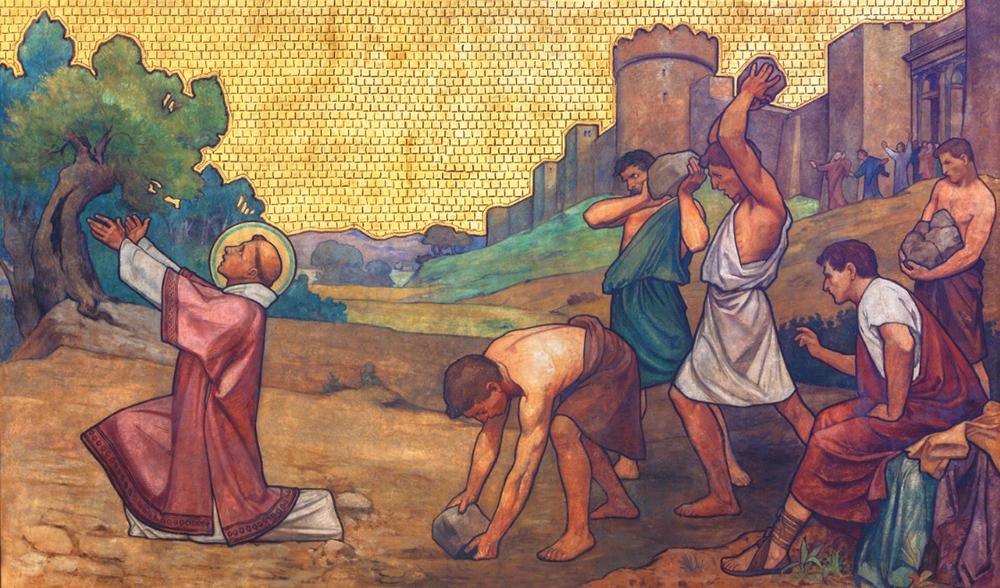
We see it in Stephen boldly rebuking the chief priests in that by murdering Jesus they had dipped their hands in the same blood as their forebears who murdered the prophets, resulting in his being stoned to death. We see it in Paul’s endurance of threats, violence, and imprisonment for the sake of bearing witness to the gospel in love to Jews and Gentiles alike. And we continue to see it repeated over and over again in the millions of little ways that Christians live open-handedly with their resources, their time and energy, and their very lives in hope of seeing the redemption of creation continue through the love of Jesus. And all of this is enabled by the work of the Holy Spirit in our lives as He gives glory to Jesus.
The Lifelong Work of Repentance
That brings us to the other word in view: repentance. True faith and true repentance are two sides of the same Spirit-given response to grace: faith turns us toward Christ, and repentance turns us away from sin. Repentance is not a singular moment but a lifetime for a believer, as sin is seen and brought to heel before Christ by faith. Faith enables us to repent of sin, for it is a work of the Spirit in our hearts, and repentance in turn sees our faith grow just like a seed, day by day as it reaches full flowering.
Hebrews 11 gives many examples of Old Testament figures who displayed faith, with one who is frequently cited throughout Scripture being Abraham. He lived in comfort in Ur of the Chaldeans – that is, in Babylon, or its ancient forerunner, but when God called him to step out in faith and go to a distant land armed only with a promise beyond his reckoning, he obeyed.
Through it all, he saw the ways that God would faithfully provide for him, even when he was unfaithful, and he lived to see God’s miraculous provision of a son with Sarah against all odds. But he never lived to see the true culmination of his faith, in a people more vast than he could ever dream of – not by the blood of relation, but by the blood of the cross, uniting people across every human-made boundary that might separate people. As we stand on the other side of that amazing fulfilled promise, we have a great and clear object of faith in Jesus, and we must continue to walk in repentance day by day, putting our sin to death and awaiting for the day that He will truly clothe us in pure righteousness.
Walking by faith, practicing repentance
Unlike Abraham, we who live today have seen the work of Jesus to conquer sin and death. We have faith that His work is truly sufficient, and we have a hope that our death, like His, will not be permanent but only temporary, only a passing moment that will be undone when Christ returns. But what does it mean to actually live our life in a way that reflects this faith, and to have repentance as a part of our daily battle with our sinful human lusts?
I think we should put it in simple, straightforward terms: it looks a lot like us humbling ourselves before one another. It looks like accepting the loving rebukes and gentle remonstrances that those who are close to us may give when we are being pulled in one way or another by sin, doubt, or worldly desires.
Practicing Repentance in Community
This may sound like a simple concept, but it very much rubs against our natural instincts as humans. How often have you had someone approach you, even someone you’re close to, and received a word that you need to change some aspect of your behavior with a great deal of grace? I’ll venture a guess, especially based on my own decades of experience, that you who are reading this can think of many moments that you haven’t exactly handled such moments with grace and aplomb.
I’ve seen deep relationships break down over such things, and churches split because someone would rather leave than accept even the mildest reproach. We have seen the stress of our cultural and political climate bringing destructive division to bear on many churches. An outside observer might see a person who genuinely cares for another expressing that through concern in love. But to the receiver, it can come across as a blow to the deepest part of how we see ourselves – as good, as right and well-meaning in all things.
In other words, it sounds simple. But in practice, it’s very difficult. Impossible, without a true change of heart. Even many Christians, those who believe in the work of Jesus and have seen the Holy Spirit move in their lives still struggle with this – but God’s grace is still there. The mark of a church where this is happening is one where they take with deadly seriousness Jesus’ words, “He who would be the greatest among you must be the servant of all.”
It’s also critical to understand that this message is one that must first take root in each of us. It’s for good reason that Jesus warned that we must “first remove the plank that is in your eye, before you help your brother remove the speck that is in his.” It’s easy to call out sin in someone else, especially if it’s not a sin we struggle with. It’s very different to face it in ourselves – but again, it is a mark of the Holy Spirit that we can do this at all. Again, this is why humility must be a mark on the life of a believer, for even a hint of pride can blind us to our own sin.
So, we keep practicing repentance, so that we may practice repentance. We live in faith that Christ has truly made the path we are on, and we seek to place our peace not in our ability to obey and be perfect, but in His perfect love and completed work. We screw up…and we confess our sins, we forgive and seek forgiveness, and we wait another day for the moment when what is hoped for, will be what is seen. And that is a hope that never grows stale, but instead becomes clearer and more refreshing the longer we rely upon it fully.
How does the working out of faith and repentance in your life look? Where do you struggle to set aside your own desires for the sake of serving and loving others? Where are the ways you have seen God work out His faithfulness in your own life? And how can we pray for you in this daily battle all believers face? Comment below or email us.
 Coronation Radio
I’ve been thinking a lot about repentance lately – what does it mean to practice it every day, like you mentioned? 🤔
LikeLiked by 1 person
Hi Marcus! Apologies for the delay, your comment got caught in the spam folder and I didn’t see for a while.
Your question is great and I think the place I start in my own heart is with praying frequently for a humble heart. I mentioned Jesus warning about removing the plank from your own eye before helping your brother with the speck in his, and I know that I have to always be keeping my own prideful heart in check for exactly that reason. It also involves being known by folks who both are close enough to me to be able to speak into my life and situations in love, so that when I’m stepping wrong I can be reminded to put my feet right. It also involves letting them know where I’m struggling, and seeking their prayer and encouragement in seasons where I’m struggling with certain sins that have been traditional struggles over my life.
It’s a day by day walk, but above all, it involves trusting that God is truly working in me, and finding the freedom that is in Christ to bring my sins and struggles into the light.
LikeLike